
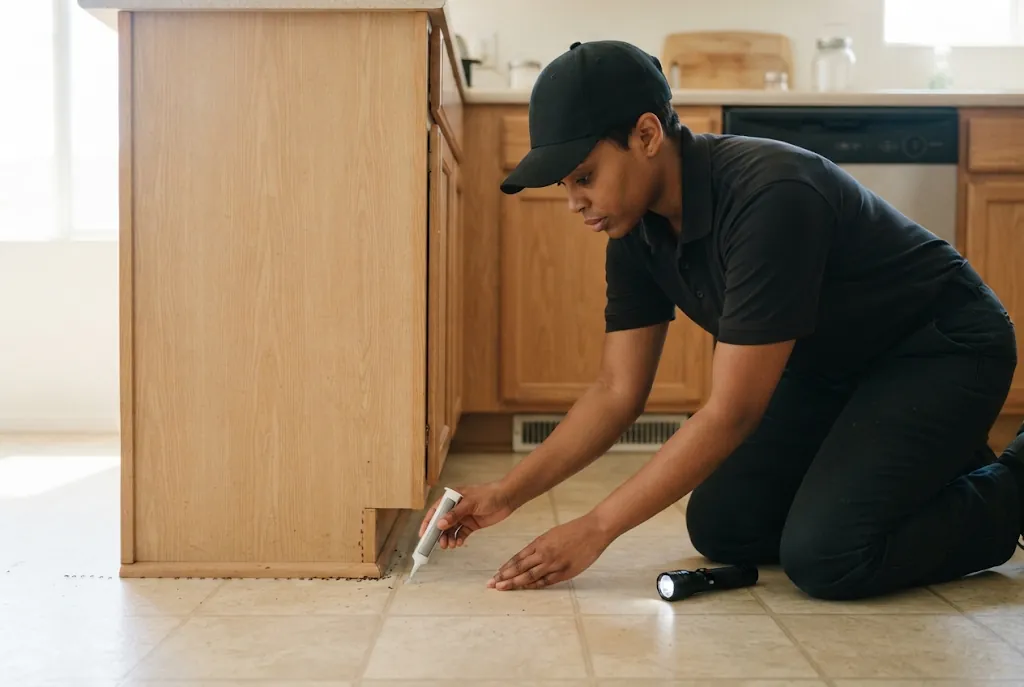
During the dry months in the Las Vegas valley, you might notice lines of ants appearing unexpectedly in your kitchen or bathroom. While it is common to assume the nest is indoors, most ant problems in the valley actually start outside. When weather conditions turn dry, outdoor ant colonies come in looking for water. Understanding where these ant trails originate helps you address the primary source of the indoor ant activity. Our technicians focus on identifying the specific ant species and finding where they enter your home to provide an effective treatment plan.
Where ant infestations begin around your property
Most ant colonies build their nests outside rather than inside your living spaces. They often establish their colonies along block walls, drip irrigation lines and the edges of concrete slabs. These outdoor locations provide a stable environment near landscape plants. When weather conditions turn dry, worker ants travel away from these outdoor areas to find water. They often enter homes through cracks in concrete, expansion joints, and plumbing penetrations. Argentine ants, in particular, travel in well-defined lines as they forage for resources. Understanding this behavior explains why you see steady lines of ants marching across your floors or counters.
Identifying Argentine ants in local yards
Argentine ants are dark brown and measure about one-tenth of an inch long. Unlike some species, all worker ants in an Argentine ant colony are the same size. Their colonies contain many queens, which allows their populations to grow very large around residential yards. To tell ants apart from termites during an inspection, we look closely at the waist and antennae. Ants have a pinched waist and elbowed antennae. Both ants and termites shed their wings after swarming. A flying ant features front wings that are longer than its hind wings, while a winged termite has four wings of about equal length. Our technicians are trained to spot these differences.
What our licensed technicians check during an inspection
When you contact Whiptail Pest & Termite, a background-checked technician inspects your property before recommending any treatment. During this visit, we evaluate several key areas around your home to locate the source of the infestation. We inspect exterior block wall foundations and property lines. We check drip irrigation lines, water meters and irrigation boxes. Our technicians carefully examine concrete slab edges and patio footings. We look at door thresholds and plumbing penetrations for signs of ant movement. We also inspect indoor sinks, bathrooms and baseboards where you see ant activity. This evaluation allows us to tailor our approach to your specific property.
Targeted baiting and treatment methods
Once our technician identifies the species and locates the entry points, we explain our findings and provide a clear price. You review and approve the cost before any treatment begins. Estimates for general pest service are free. We apply targeted ant baits that foraging workers transport back to the nest. We also perform an exterior perimeter treatment around the foundation, doors and windows. Granular treatments are placed in gravel beds and landscape areas where needed. We apply all products according to their labels and provide you with written preparation and reentry instructions before the treatment day. If you choose our quarterly plan, we return for scheduled exterior visits every three months.
Homeowner steps to prevent indoor ant trails
While our treatments address active ant populations, maintaining your property helps prevent new trails from forming inside your home. Fix leaking hose bibbs, outdoor faucets and interior plumbing fixtures to reduce available water. Keep your drip irrigation off the foundation to keep the soil near your home dry. Keep stored food and pet food in sealed containers to remove food sources. Trim plants away from walls so they do not touch the exterior of your home. Keep your garage tidy and clear of food crumbs. Keep woodpiles and gravel away from the house to reduce outdoor hiding spots.
When to request a property evaluation
If indoor ant trails continue appearing across kitchen counters or bathroom floors, professional treatment addresses the outdoor colonies. You can submit a request through our website, and our office staff will call or email during regular business hours to confirm an appointment date and time. For ongoing care, review our pest control plans to learn how quarterly exterior perimeter applications maintain treated zones around your home throughout the year. If covered pests come back between scheduled visits, we return and re-treat at no charge. Plan customers also receive interior treatments on request.