
- Home
- Termite control
Termite Control for Las Vegas
Termites work out of sight inside valley homes. A free homeowner inspection confirms whether termites are active and where.
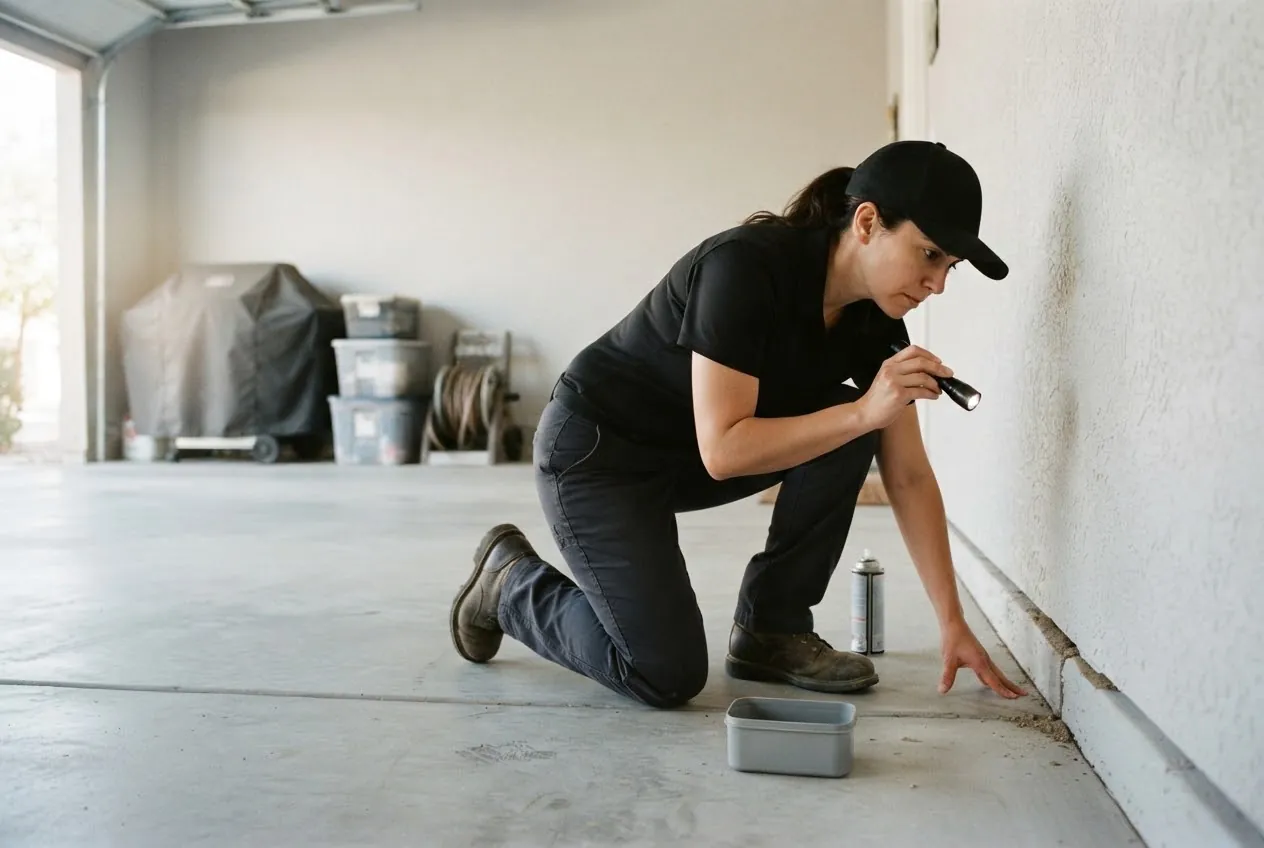
Common signs of termite activity
These signs suggest possible activity, but only a thorough professional inspection confirms an infestation. Subterranean termites are the most common species found in Southern Nevada.
Mud tubes on foundation
Pencil-width mud tubes along concrete slabs or stem walls allow subterranean termites to travel above ground.
Discarded swarmer wings
Winged termites swarm in warm weather, leaving shed wings on windowsills or near exterior lights.
Blistered paint on trim
Paint or drywall that bubbles or looks blistered can hide termite tunnels behind it.
Hollow sounding wood
Baseboards or wooden framing that sound hollow when tapped can indicate interior gallery feeding beneath the surface.
Frass (termite droppings)
Drywood termites push out small pellet droppings, though they are less common in the valley than subterranean termites.
Doors or windows that stick
Doors or windows start to stick when termites damage the framing around them, and an inspection confirms the cause.
Why a professional inspection matters
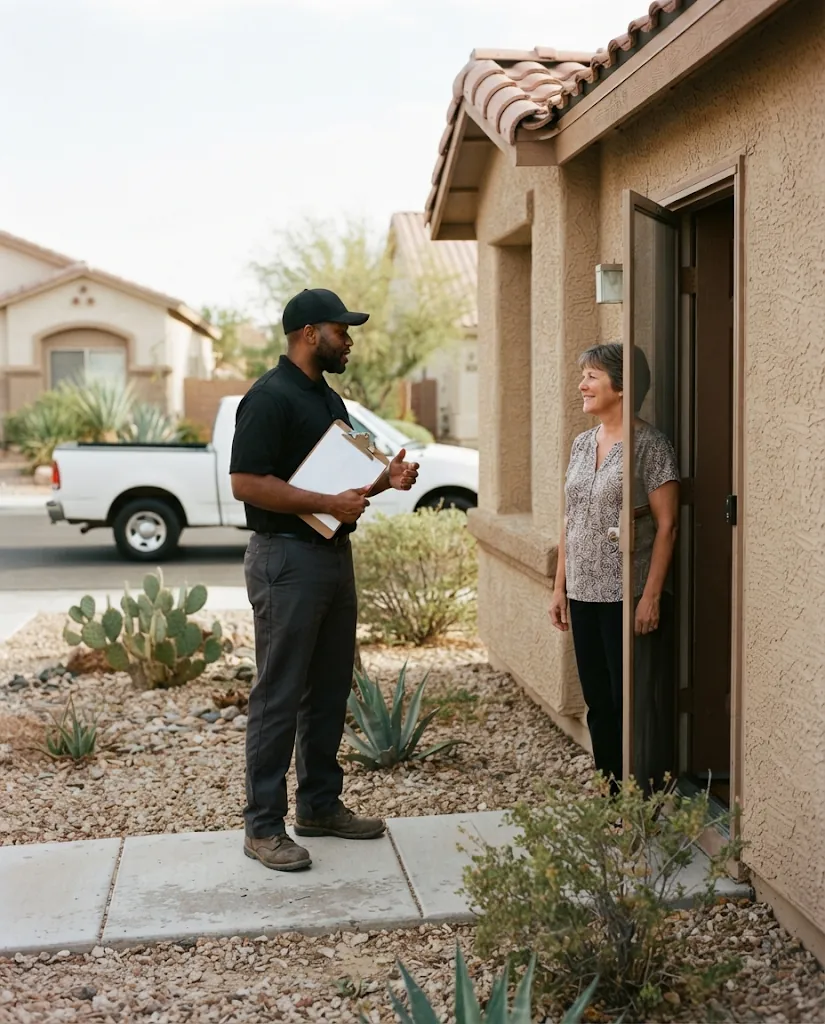
Termite colonies live hidden underground or inside building components, making visual confirmation difficult. An inspection identifies the termite species, active locations, entry pathways, and conducive structural conditions like slab cracks or excessive moisture. It also checks for evidence of past chemical treatments. Recommendations are based directly on these findings.
A pest inspection focuses solely on identifying insect activity and conducive conditions. It is not a structural engineering assessment or a property damage valuation, and it cannot reveal conditions behind solid, closed walls.
Our thorough termite inspection steps
Inspection steps vary depending on home design, site access, and the specific termite species involved.
Examine exterior foundation
We check foundation perimeter walls, stucco edges, and weep screeds for mud tubes or soil contact.
Inspect interior baseboards
We examine interior walls, baseboards, plumbing penetrations, and door frames for wood damage or tubes.
Check garage and slab seams
We inspect garage expansion joints, stem walls, and concrete seams where termites often penetrate structures.
Evaluate attic framework
We look at accessible attic framing and roof trusses for signs of drywood or subterranean activity.
Identify moisture sources
We check irrigation lines, AC condensation leaks, and plumbing drips near the foundation edge.
Determine species type
We identify whether insects are subterranean or drywood termites to select the correct control method.
Explain findings and price
The technician walks you through what was found, giving a recommendation and exact price you approve before treatment.
Termite treatment and prevention choices
We offer liquid treatments, bait stations, localized spot treatments, and protection plans. We do not perform fumigation; drywood termites are referred to a specialized company.
Comparing our termite treatment methods
| Method | Best fit | Disruption | Follow up |
|---|---|---|---|
| Liquid soil treatment | Best for active subterranean termite infestations around foundations | Requires trenching and concrete drilling along patios or slabs | Includes a renewable one-year retreatment warranty |
| Bait and monitoring | Best for long-term monitoring and nondisruptive prevention | Requires ongoing periodic inspection of exterior ground stations | Includes ongoing station monitoring under annual plan |
| Localized treatment | Best for isolated, highly localized subterranean activity points | Not suitable for widespread or multiple area infestations | Includes specific follow-up visits outlined in service agreement |
Factors shaping treatment and cost
Treatment methods and costs vary based on home construction and infestation extent. Fixed prices are never provided before a thorough inspection.
Warranty, monitoring, and plan renewal
Our liquid treatments and bait installations include a one-year retreatment warranty. Key terms include:
- Annual renewal: Coverage renews yearly with enrollment in the Termite Protection Plan.
- Property transfer: The warranty can be transferred to a new owner if the plan remains active.
- Subterranean coverage: Applies solely to retreatment of subterranean termites; damage repairs are excluded.
- Preexisting conditions: Does not cover preexisting structural wood damage.
- Coverage limits: Warranty ends if the plan is cancelled, access is denied, or unnotified structural changes occur.
This summary outlines key features; your signed service agreement governs all warranty terms.
Homeowner termite prevention checklist
These maintenance practices help reduce attractive structural conditions, though prevention steps alone do not guarantee a termite free home.
- Fix leaking hose bibs, irrigation lines, and AC drain lines near walls
- Ensure irrigation sprinklers do not spray water directly onto foundation slabs
- Keep soil, gravel, and mulch at least six inches below exterior stucco edges
- Store firewood, lumber, and wooden items away from foundation walls
- Trim tree branches and heavy shrubbery so foliage does not touch walls
- Seal gaps around plumbing penetrations and electrical conduit entries
- Inspect exposed concrete foundation edges regularly for mud tube growth
- Keep expansion joints along patio slabs properly sealed against moisture
Questions about termite services
How much does a homeowner termite inspection cost?
Homeowner termite inspections are free. The technician explains findings and gives a price for you to approve before treatment begins. Formal real estate WDI reports are priced separately.
How long does a thorough termite inspection take?
Inspection length depends on the home size, layout, and access. Our office lets you know what to expect when booking your visit.
How is the right termite treatment method chosen?
Treatment selection depends on the termite species found, property construction type, foundation layout, and infestation severity. Subterranean termites are treated with liquid barriers or bait stations, while drywood termites are referred out for fumigation.
Do residents need to leave during termite treatment?
Occupancy and reentry instructions depend on the chosen method and are provided in writing prior to service day based on product labels.
How long does a typical termite treatment take?
Treatment duration depends on your home and the chosen method. The technician provides an estimated timeframe along with your quote.
Does Whiptail repair wood damaged by termites?
No. We specialize in inspecting and treating active termite infestations. Structural wood repairs or cosmetic carpentry must be performed by a licensed contractor. Our inspection reports identify activity areas to share with your repair specialist.
How does the retreatment warranty and renewal work?
Liquid treatments and bait installations include a one-year retreatment warranty. This warranty covers retreatment of subterranean termites if they return, and it can be renewed annually through our Termite Protection Plan. Repairs are never covered.
How quickly are real estate WDI reports delivered?
Formal Wood Destroying Insect reports for home sales are delivered by email within one business day following the inspection. Pricing for real estate reports is provided at the time the service is ordered through our office.
Book a free termite inspection
Book your free homeowner termite inspection. Submitting an online request does not confirm an appointment; our office calls or emails to confirm your scheduled time.

Feedback from local clients

Demo badges
These are fictional badges for demonstration purposes only. A live site shows the business’s real awards and credentials.
These are sample reviews written to demonstrate this website design.