
- Home
- Pest control
- Bee and Wasp Control
Bees and Wasps at Your Home
Stinging insects build nests around eaves, rooflines and yard structures. Our licensed technicians inspect first and give you a price before treating.
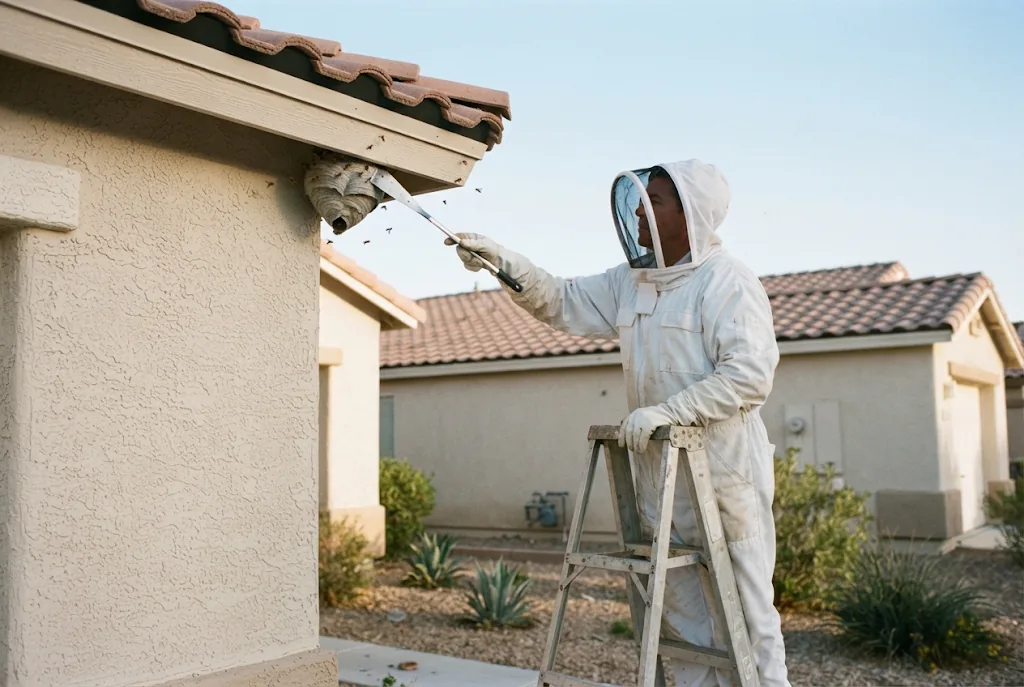
Recognizing active bees and wasps
Homeowners often notice insect flight near rooflines or outdoor seating. Seeing these signs suggests activity, but a physical inspection confirms whether a nest or hive is present.
Open paper nests under eaves
Paper wasps build umbrella-shaped paper structures attached to roof overhangs, exterior beams or patio covers.
Clusters on tree branches
Passing honey bee swarms form temporary tight clusters on branches, shrubs or exterior walls while scout bees look for a new home.
Bees entering a wall or box
Bees going in and out of one spot on a wall, roof or meter box indicate a colony inside.
Paper nests under eaves
Paper wasps build open, umbrella-shaped paper nests under house eaves or on garden shrub branches.
A paper nest on a shrub
Paper wasps build umbrella-shaped paper nests on shrub branches or under roof eaves, where people are easily stung while trimming plants.
Stung while trimming shrubs
People are often stung while trimming yard plants or clearing paper wasp nests from rooflines.
Understanding sting risks and nests
Paper wasps construct open paper nests under eaves and on shrub branches. People are often stung while trimming garden plants or clearing nests from rooflines. Honey bee swarms may gather on walls or establish hives inside structure cavities.
Whiptail Pest & Termite treats and removes wasp nests, honey bee swarms and hives on or in building structures. We do not relocate live colonies, but we refer homeowners to local beekeepers when a swarm can be moved. For a swarm directly on a home or insects inside living space, call our office instead of submitting a form.
How our technicians inspect your property
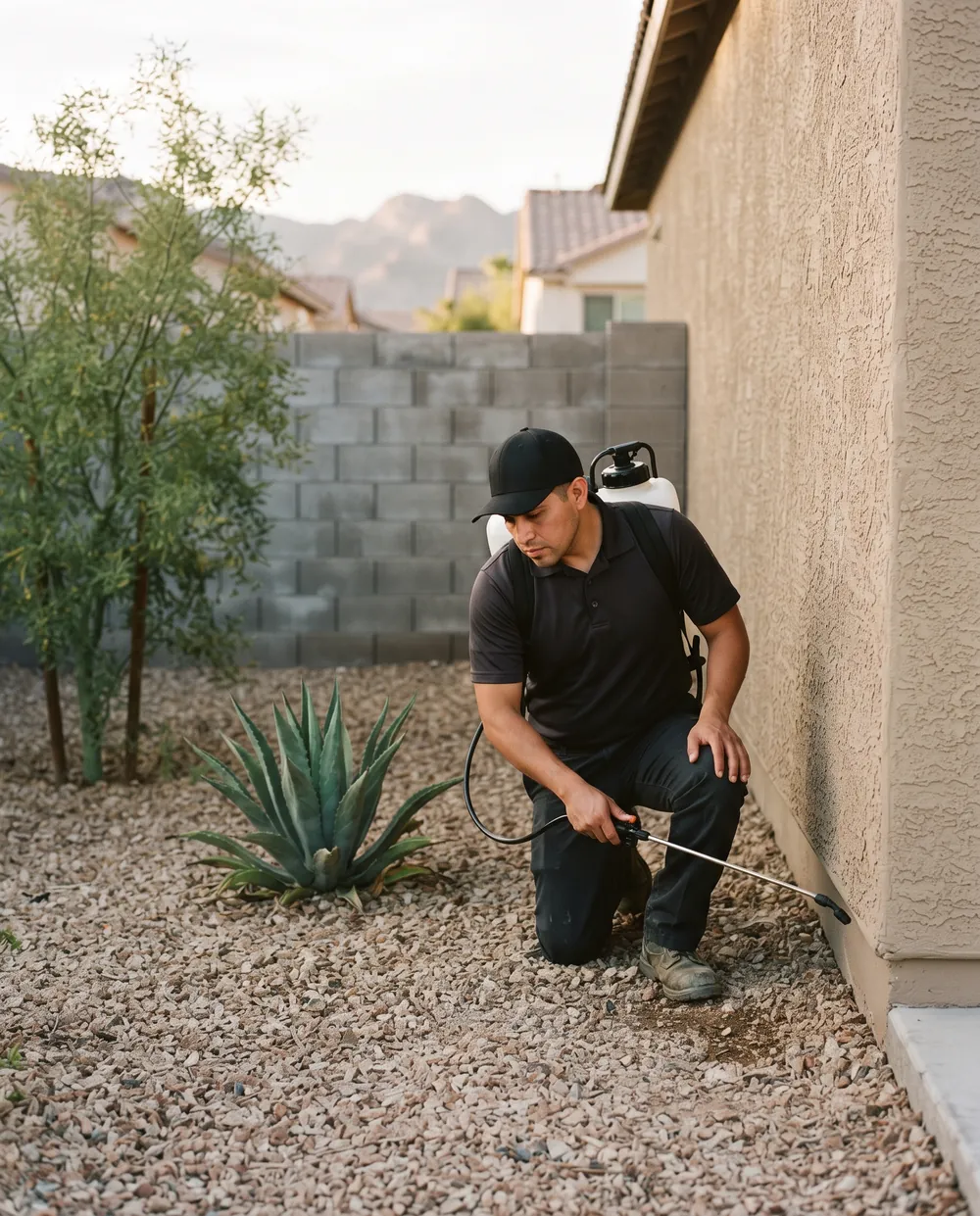
A licensed technician examines the exterior structure and yard to locate active nests, entry points and specific stinging insect species before recommending a treatment plan.
Treating wasp nests and bee hives
We use targeted removal methods based on the specific insect and nest site found. You approve the treatment recommendation and clear price before any application starts.
Stinging insects in the Las Vegas valley
Paper wasps build open paper nests under eaves, patio roofs and plant branches across Las Vegas homes. Honey bee swarms temporarily cluster on branches, fences or walls while scouts search for a new site. Most swarms move on within a day or two, but colonies that enter structural gaps build comb inside wall voids or boxes.
Preparation and visit expectations
Proper preparation helps our technicians access nesting sites and helps treatment proceed smoothly for your household.
Clear work area access
Move outdoor furniture, potted plants and yard items away from eaves, patio overhangs or wall areas where nests are located.
People and pet guidance
Your technician provides written instructions explaining when household members and pets may return to treated areas.
Follow written reentry rules
Review and follow the written reentry instructions provided before treatment day before allowing people or pets back into treated outdoor spaces.
Review cost and recommendations
Your technician explains all findings and provides a clear price quote for your approval before starting work.
Schedule follow-up if required
If hidden hive activity requires additional visits, your technician explains how many visits to expect.
Preventing bee and wasp nesting
Routine maintenance steps help reduce attractive nesting sites, though prevention alone does not end an active infestation.
- Seal gaps around soffits, roof vents and exterior wall penetrations.
- Check shrub branches for paper wasp nests before trimming foliage.
- Keep meter box lids and outdoor irrigation box covers firmly closed.
- Leave active nests and swarms to professionals rather than clearing them yourself.
- Inspect eave lines regularly for small developing paper wasp nests.
- Trim tree branches away from exterior rooflines and wall surfaces.
Related pest services
Bee and wasp service questions
How much does bee or wasp treatment cost?
Pricing depends on the insect species, nest location and whether structural removal is required. Your technician inspects the property first and provides a clear price for your approval before starting any work.
What about children and pets during treatment?
You will receive written preparation and reentry instructions before treatment to explain when family members and pets can return to treated spaces.
Do I need to prepare my yard before the visit?
Yes. We ask that you clear access to eave lines, gates and nesting sites by moving patio items. Your technician provides written preparation instructions when your visit is scheduled.
Do you relocate live honey bee colonies?
We do not relocate live colonies. We treat and remove honey bee swarms and hives on structures, but we refer customers to local beekeepers when a swarm can be moved.
Are wasp nests covered under general pest plans?
Our Quarterly Home Pest Plan covers paper wasp nests within reach on the home structure. Honey bee hive treatments and complex swarm removals are scheduled separately outside standard maintenance plans.
How many visits are needed for nest removal?
The technician explains how many visits to expect after inspecting. A colony inside a wall or roof structure can require follow-up visits.
Schedule a bee or wasp visit
We serve the whole Las Vegas valley. Call (702) 000-0000 instead of using the form for a swarm on the home or bees inside living space.

Feedback from local clients

Demo badges
These are fictional badges for demonstration purposes only. A live site shows the business’s real awards and credentials.
These are sample reviews written to demonstrate this website design.