
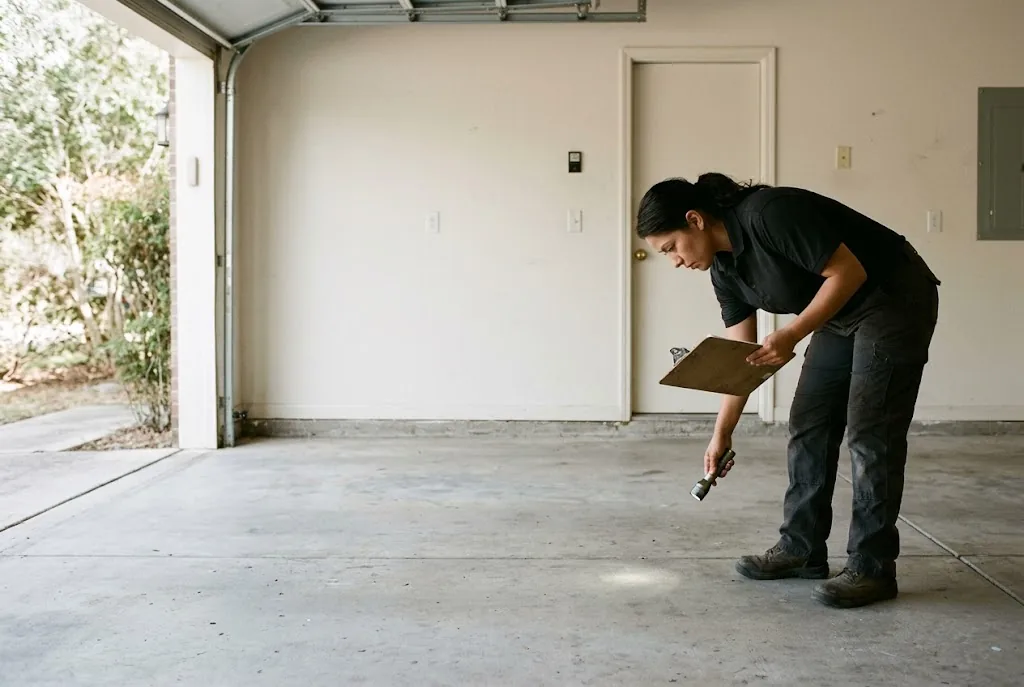
During a real estate transaction in the Las Vegas valley, property documentation often requires a Wood Destroying Insect inspection. This evaluation documents whether visible signs of wood destroying organisms exist on the property at the time of the walk-through. Subterranean termites originate in the soil, constructing pencil-width mud tubes to move above ground level. When dealing with slab construction, they gain entry via plumbing penetrations, expansion joints, and foundation cracks. An inspection confirms activity because nobody can verify subterranean termites from a single sign or a photograph. Knowing who orders the document, how it is conducted, and what information it contains helps buyers and sellers understand the process.
Who orders the report and how scheduling works
Our office inspects homes for wood destroying insects for buyers, sellers, agents, and lenders, providing a written WDI report. When an inspection is requested, our scheduling staff books a licensed technician to visit the home. The fee for a formal real estate inspection report is quoted directly when ordered. This is a separate paid service from our free termite inspections for homeowners.
Once the technician completes the site evaluation, the written report is generated. The report is delivered by email within one business day of the inspection. Buyers, sellers, agents, and lenders use this document to review the property condition based on visible evidence found on that day.
What the inspection covers and its limits
A real estate inspection focuses on identifying active infestations or past evidence of wood destroying pests, such as subterranean termites. The inspection covers visible and accessible areas only. The technician examines areas of the structure including foundation edges, garage interiors, and exposed perimeter walls. During warm weather, winged swarmers frequently appear, especially following rain showers. Finding discarded wings on windowsills is a common first sign of activity.
- No destructive inspection is performed, meaning there is no opening walls, removing baseboards, or pulling up flooring.
- The report provides no structural or engineering opinion and no building safety assessment.
- The document includes no damage valuation or financial assessment of past wood damage.
Because technician evaluations rely on visible evidence, inaccessible wall voids or hidden spaces remain outside the scope of a standard visual report. Subterranean termite damage is frequently hidden behind baseboards and drywall, which cannot be cut into during this visual walk-through.
Customer responsibilities around the foundation
Homeowners play a role in keeping the foundation visible and accessible for inspections. Helpful prevention includes keeping irrigation water away from the foundation, fixing drips and leaks, and trimming vegetation off the walls. Moving woodpiles and gravel away from the structure also removes favorable conditions. These steps help keep the area around the foundation dry and visible, allowing the technician to perform a proper visual evaluation.
Fixing moisture issues supports the home condition, though prevention alone does not end an active infestation. Storing food in sealed containers and keeping garages tidy also supports general pest prevention, but a dedicated evaluation remains necessary for real estate documentation.
Reviewing findings and next steps
If active termites are found, we can quote corrective treatment. During a visit, the technician identifies the pest, locates entry points, determines the conditions supporting the infestation, and explains the findings. The choice of termite treatment depends on the pest species, construction type, location of activity, access, extent of the infestation, and whether the primary goal is prevention or treatment.
Treatments for subterranean termites may include liquid soil applications around the foundation, such as trenching and drilling through the patio or slab where needed. Bait and monitoring stations placed in the ground are another option. Our technician provides a price for your approval prior to starting any treatment applications. We do not provide damage repair services. Structural repairs go to a licensed contractor. If corrective treatment is chosen, termite applications are booked as a separate appointment. To schedule an inspection or discuss findings for an upcoming home sale, visit our termite inspection page or call our office staff.