
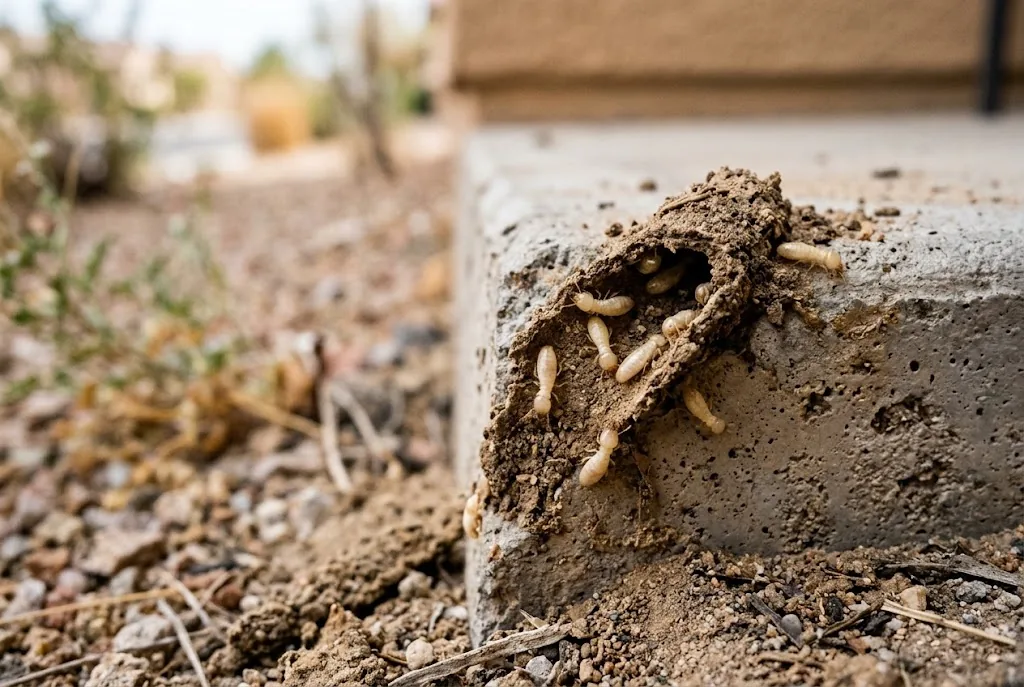
Finding small winged insects inside your home or near window sills often causes confusion. Winged termites and flying ants look similar at a distance, but key physical characteristics distinguish them. Knowing what details to examine helps clarify what type of insect is active around your structure. Both shed their wings after swarming to establish new colonies. A winged termite has four wings that are about equal in length, while a flying ant has front wings that are longer than its hind wings.
Physical differences between termites and ants
Examining body shape and antennae reveals clear physical distinctions between these two insects. Nobody can confirm termites from a photo or a single sign, but these physical features are helpful to notice. When looking at the insect, pay attention to the waist and antennae shape:
- Winged termites have a straight, thick waist.
- Ants have a distinctly pinched waist.
- Winged termites feature straight antennae.
- Ants have elbowed antennae that bend sharply.
Behavior and discarded wings on windowsills
Both winged termites and flying ants emerge in swarms during warm weather, often after rain. Discarded wings on windowsills, doors, or baseboards are a common first sign that swarmers have landed nearby. Following any termite treatment or bait installation to address an active colony, we offer a Termite Protection Plan. This plan provides a yearly inspection and ongoing monitoring. The liquid soil treatment or bait installation comes with a one-year retreatment warranty for subterranean termites. This warranty renews each year the plan is kept. It covers retreatment only, never damage repair or preexisting damage. If the home is sold, the warranty is transferable to the new owner if the plan is maintained.
Subterranean termite signs in the Las Vegas valley
Subterranean termites live in the soil and build pencil-width mud tubes to travel above ground. On slab homes, which are common across the Las Vegas valley, they enter through cracks, expansion joints, and plumbing penetrations. Their damage is often hidden behind drywall and baseboards until mud tubes or winged swarmers appear. Drywood termites exist in Nevada but are less common in the valley. If drywood termites are found, they are referred to a fumigation company, because we do not perform fumigation or tenting.
What the termite inspection involves
An inspection happens first to confirm activity. The technician inspects inside and outside to identify the pest, find entry points, and locate the conditions supporting it. For termite evaluations, the technician checks visible and accessible areas around the foundation, garage, and exterior perimeter. The termite treatment choice depends on the species, where activity is located, the construction type such as a slab or patio, access, how extensive it is, and whether the goal is treatment or prevention.
Customer responsibilities and prevention steps
Prevention alone does not end an active infestation, but it helps make the structure less inviting. Your responsibilities include resolving plumbing leaks, keeping sprinkler water off the foundation, and pruning bushes away from the house. You can also help by moving gravel away from the slab and sealing gaps around the exterior. We do not offer damage repair. Structural repairs remain the responsibility of the homeowner, and damage repairs go to a licensed contractor.
Next steps for your home
Termite inspections for homeowners are free. A formal wood destroying insect report for a home sale is a separate, paid service. If active termites are discovered during the evaluation, your technician provides a clear treatment recommendation and a price quote for approval before treatment starts. Financing is available for termite treatments through a third-party lender, subject to credit approval. Learn more about our evaluation process or book a visit on our termite inspection page.