
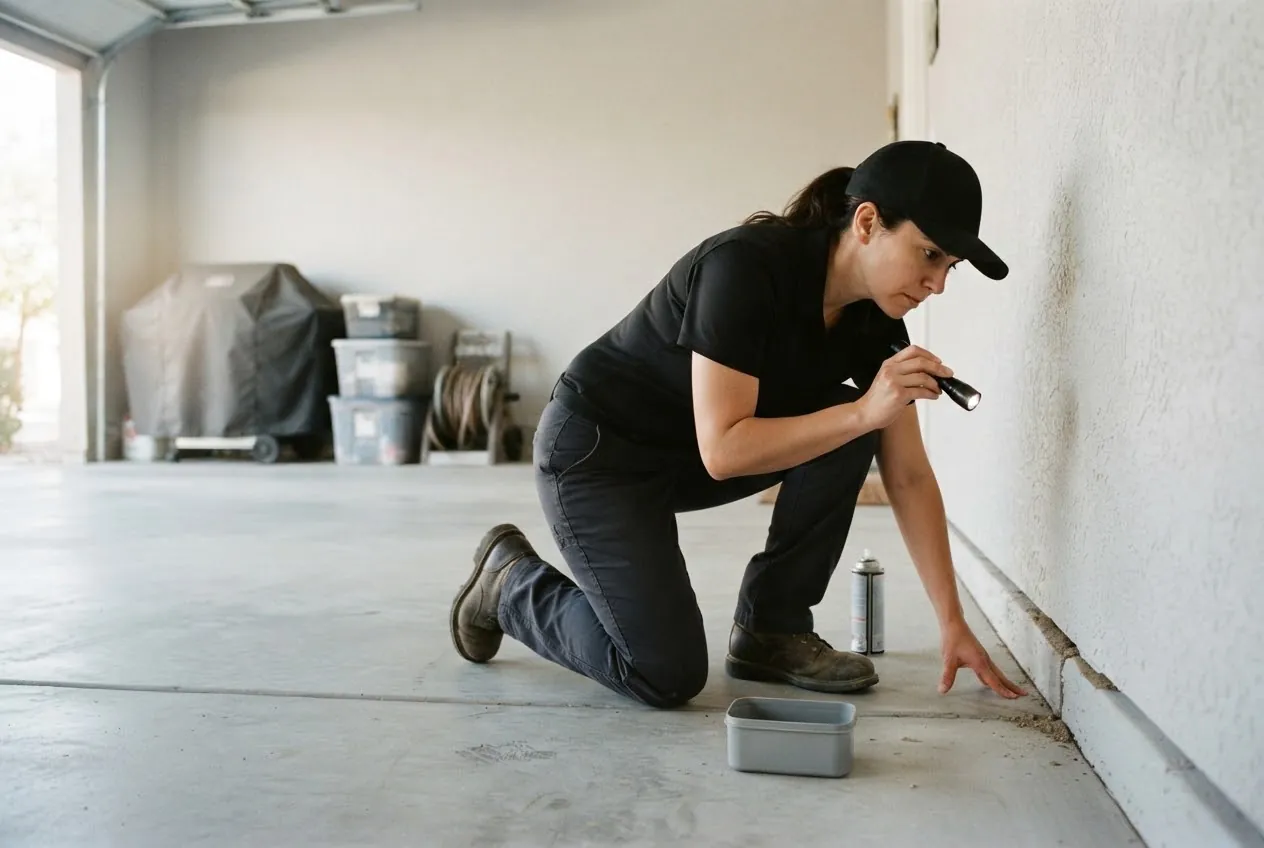
Subterranean termites live in the soil beneath residential properties and enter structures built on concrete slabs across the Las Vegas valley. Because a concrete foundation appears solid, people often assume it prevents insects from entering the living space. Subterranean termites use thin gaps and plumbing penetrations to reach the wooden framing inside the house. Identifying the signs of their presence helps homeowners know when to contact a professional for an evaluation. Finding subterranean termites in your home requires proper identification before starting any application. Our licensed technicians provide that service during an initial visit. A technician identifies the species and finds the entry points before recommending any treatment.
How subterranean termites enter slab foundations
Subterranean termites travel from the dirt into the home to reach the wood framing. They use several common entry routes found in residential construction across the valley.
- Cracks in the concrete foundation floor or the garage slab
- Expansion joints placed between concrete pours
- Plumbing penetrations that bring supply lines and drain pipes through the concrete
Keeping irrigation water off the foundation and trimming plants away from walls can help reduce the conditions that draw subterranean termites near these entry points. Fixing leaks and drips around the house also helps keep the exterior perimeter clear. A trained technician knows to inspect these specific exterior and interior locations during a property visit.
Mud tubes along exterior walls and baseboards
Because subterranean termites live in the soil, they build pencil-width mud tubes to travel above ground. These tubes allow them to move from the dirt to the wooden parts of the structure. You might see these mud tubes running vertically along exterior foundation walls or along the edges of garage slabs. Inside the house, mud tubes can appear along interior baseboards or emerging from gaps near plumbing lines. Seeing active or dried mud tubes points to a potential problem, but only a professional inspection confirms active subterranean termites. A technician inspects both the inside and outside of the property to locate these tubes and trace them back to their source in the ground.
Discarded wings on windowsills and floors
Winged termite swarmers appear in warm weather, often following rain in the Las Vegas valley. These flying termites leave their underground colony to start new ones. Shortly after taking flight, the swarmers drop their wings. Finding piles of discarded wings on interior windowsills or floorboards is a common first sign of subterranean termites near the house. Termite swarmers have a straight waist, straight antennae, and four wings of equal length. This distinguishes them from flying ants, which have a pinched waist and elbowed antennae. You do not need to know which pest you are seeing when you find these wings. You can describe the discarded wings to the office when you call, and the technician will look for these specific physical traits during the inspection.
Hidden structural damage behind drywall
The damage caused by subterranean termites is often hidden behind drywall and baseboards. Because they feed on the wood framing from the inside of the walls, the structural damage remains unseen for a long time. Homeowners might notice changes in the surface of the walls or wood trim, but the extent of the damage requires professional evaluation. Our company does not provide damage repair services. Structural wood repairs must be completed by a licensed general contractor after the termite treatment is complete. The focus of our visit is identifying the species, locating the entry points, and explaining what we found.
Arranging a professional termite assessment
Nobody can confirm termites from a single photo or a single sign alone. A physical inspection of the property confirms the presence of subterranean termites. Our licensed technicians inspect the exterior perimeter, garage slabs, and interior room edges to identify activity. Homeowners receive a clear service recommendation and a price quote after the walkthrough. You see and approve the price before any treatment begins on your property. We provide a free termite inspection for homeowners to assess the foundation and explain our findings clearly. Read about our professional termite inspection services to book your property evaluation.