
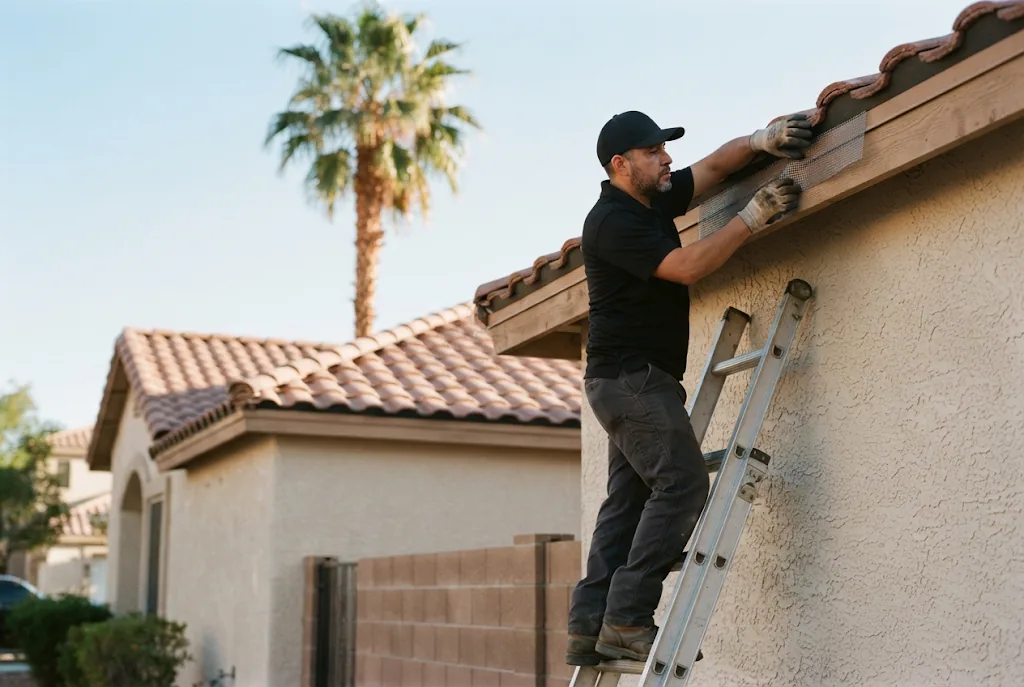
Roof rats are agile climbing rodents that frequently nest high off the ground in palm trees, dense shrubs and residential attics. They often travel along block walls and utility lines to navigate around neighborhoods. Understanding their travel routes helps property owners recognize the early signs of rodent activity. Because roof rats prefer elevated spaces, they often go unnoticed until you hear them indoors. Our background-checked technicians inspect your roofline, attic access, garage and yard to find where roof rats enter the structure.
How to identify roof rats and recognize signs of activity
Roof rats feature slender bodies with a tail that measures longer than their combined head and body length. This distinguishes them from house mice, which are smaller at four to six inches long including the tail. While house mice typically nest low in garages or wall voids, roof rats nest high. Because roof rats are active in the dark, you might notice structural evidence before seeing the rodents directly. Typical indicators include dark droppings found in attics or garages. Rodents contaminate food areas and surfaces with droppings and shed skins, and they leave urine and gnaw marks along their paths. You might also find gnaw marks on wooden support beams, electrical wiring and insulation. Scratching sounds coming from ceilings or attic spaces at night are another common sign of roof rat activity.
Exclusion work using steel mesh and sheet metal
Resolving a roof rat presence involves sealing structural entry points to restrict movement into the building. During the initial visit, our technician inspects rooflines, attic access points, garages and the yard to locate openings. We perform exclusion work by securing the entry routes we find with durable materials. We install steel mesh and sheet metal across gaps along eaves, roof overlaps and vent openings. Sealing closes the entry points we find along the exterior of your home. We also place locked, tamper-resistant bait stations along exterior walls. Indoors, we set traps within accessible attic spaces or garages and return for follow-up visits to check traps and remove trapped rodents.
Services we do not perform
To maintain clear expectations, our company defines the scope of our rodent control operations. We perform structural exclusion, install exterior bait stations, set interior traps, and conduct follow-up visits to check traps and remove caught rodents. However, our services do not include attic insulation replacement or removal. We do not provide structural cleanup or sanitizing services. We also do not perform dead animal removal from inside sealed wall voids. Property owners needing extensive cleanup or insulation replacement should contact a specialized contractor for those services.
Steps property owners can take to reduce rodent attraction
In addition to our exclusion work, modifying environmental conditions around your yard helps reduce roof rat activity on the property. Trim plants away from the house to remove pathways to the roof. Keep woodpiles away from the house so rodents have fewer places to hide. Keep your garage tidy and reduce clutter to remove low nesting spots. Fix leaking outdoor faucets and interior plumbing fixtures to remove water sources. Keep stored food and pet food in sealed containers. Taking these steps makes your property less inviting to rodents looking for food and shelter.
Scheduling a rodent inspection
If you hear scratching noises above your ceiling at night or observe droppings in the garage, a professional inspection addresses the problem. When you contact us, the technician identifies the pest and finds entry points before recommending any treatment. When a rodent is inside active living quarters, call our office directly so our staff can fit an urgent visit in when a technician is available. For general exterior inspections and exclusion estimates, submit a request on our website to receive a call back during regular business hours. You see and approve the price before any work begins. Explore our rodent control page to review how our trapping and sealing steps protect your home.