
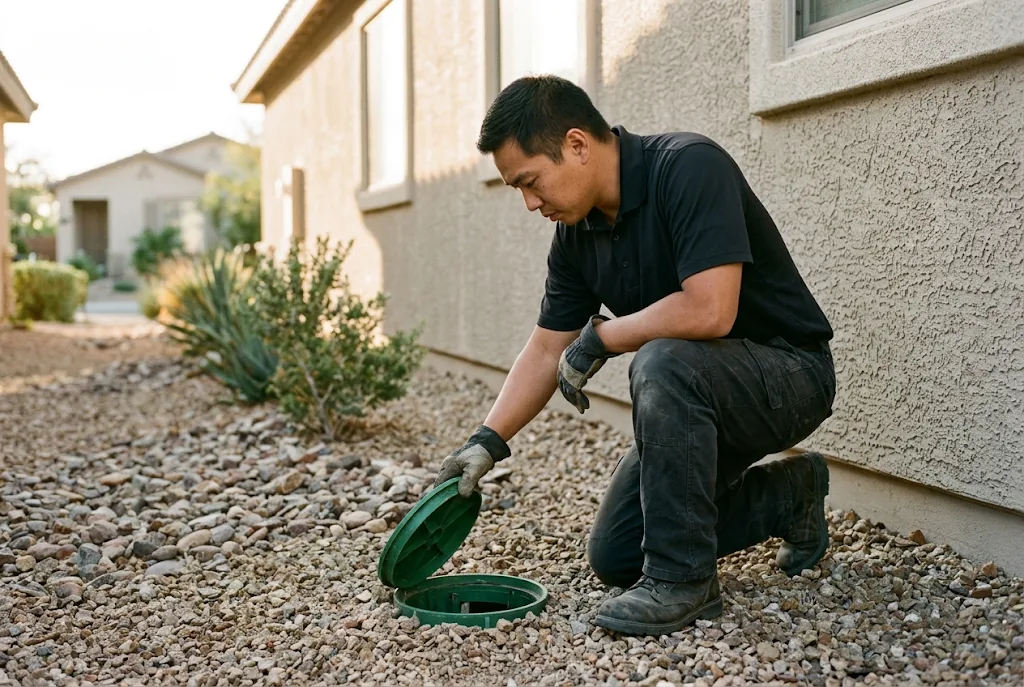
Selecting an effective approach for subterranean termites depends on your property layout, foundation construction, and existing termite activity. Homes in the Las Vegas valley typically use a liquid soil treatment, in-ground bait stations, or a combination of both techniques. Understanding how each method works helps homeowners evaluate recommendations during a professional property inspection. The technician identifies the species and finds entry points before recommending any treatment. Because every house is built differently, there is no single answer for every location.
Liquid soil treatments for concrete slab foundations
Liquid treatments establish a continuous treated zone in the soil surrounding the residential foundation. To create this application, technicians trench along perimeter soil edges and drill through exterior concrete slabs, patios, or walkways where necessary. When subterranean termites pass through the treated soil to reach structural framing, they encounter the applied product. The technician checks the exterior foundation walls, garage concrete slabs, and expansion seams to determine where this method fits best. Homeowners can help the process by keeping gravel and woodpiles away from the house and fixing leaks around the exterior perimeter. This preparation keeps the foundation clear for the initial application and subsequent follow-up visits.
Underground termite baiting systems
Termite baiting uses stations installed directly into the ground around the home perimeter. Technicians monitor these stations regularly for subterranean termite activity. The bait provides a targeted method for addressing subterranean termites living in the soil beneath the property. During an inspection, the technician evaluates the soil edges, gravel beds, and attached concrete patios to decide where bait stations make the most sense. Products are applied according to their labels, and customers receive written preparation and reentry instructions before the treatment day. Once installed, the Termite Protection Plan includes a yearly inspection and monitoring of these exterior stations.
Key factors that guide treatment selection
Determining the appropriate treatment method requires evaluating structural access and specific home conditions during an on-site visit. A trained technician reviews several details before recommending a plan.
- The specific termite species identified during the visual inspection
- Locations of active subterranean termite mud tubes or damaged wood
- Home foundation design including attached concrete patios and room additions
- Ease of soil access around the exterior property line
- Whether the primary objective is localized treatment or ongoing preventive monitoring
Termite treatment choice depends on how extensive the activity is and where the termites are entering the building. Our team evaluates these structural elements without pressure.
Addressing drywood termites and structural repairs
Liquid soil applications and ground bait stations target subterranean species living beneath the dirt. Drywood termites also exist in Nevada, though they are less common in the valley. If drywood termites are identified during a property walkthrough, we refer homeowners to a dedicated fumigation company. Our company does not perform tenting or structural fumigation services. Additionally, our technicians do not provide damage repair. Fixing weakened wood requires a licensed general contractor. By focusing strictly on identifying the pest and applying the appropriate treatment, we maintain clear boundaries on what our service covers.
Next steps for your home evaluation
Before selecting a treatment approach, our technician conducts an evaluation of the property foundation, exterior soil lines, and garage slab. You receive a recommended strategy and clear pricing to approve before work starts. We review all costs upfront so there are no surprises. A termite evaluation for homeowners is provided at no cost, allowing you to learn about the condition of your home. Visit our main termite control page to learn about our application methods and request a free homeowner inspection. We schedule a convenient time for the technician to visit and assess the exterior perimeter.