
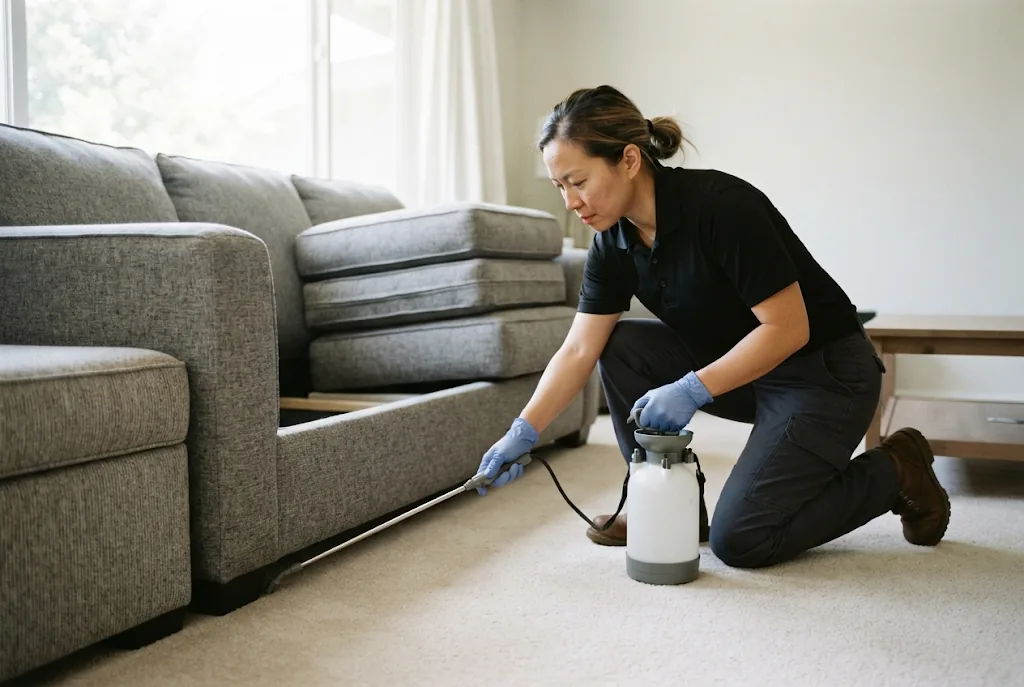
A flea infestation inside a home requires a coordinated approach that combines professional home applications with proper veterinary care for your pets. Treating only the house or only the animal leaves part of the flea population undisturbed, which allows the activity to continue. Adult fleas are small, dark, wingless insects that jump from place to place. Signs of their presence include seeing flea dirt, which appears as a fine reddish-black dust in pet fur and bedding. Most of an infestation actually consists of eggs, larvae, and pupae scattered throughout carpet, rugs, pet bedding, and furniture. This means the problem goes far beyond what you can see on the pet itself.
Flea habits and indoor infestations
Because the immature stages of the flea life cycle develop off the animal, treating home flooring and upholstery is an unavoidable step. An adult flea on an animal represents only a tiny fraction of the total insects living in your house. The brown dog tick is another pest often found inside homes. This tick is unique because it can complete its entire life cycle indoors, and it is commonly found where the dog rests and in nearby cracks and crevices. Both pests require serious attention to the areas where pets sleep and spend their time. For our indoor service, our technician will focus on the floors and furniture where the eggs and larvae are waiting to develop. Treating the yard is also part of this process.
Coordinating service with your veterinarian
For our indoor control efforts to succeed, pets must be treated by a veterinarian the same week as the professional house service. While our team handles the interior application on floors and furniture as well as the yard treatment, a veterinarian provides the appropriate products for the animal itself. We do not provide pet medications. Before treatment day, customers get written preparation and reentry instructions. Your responsibilities include keeping children and pets out of treated areas as outlined in those written documents. The customer, not the technician, is responsible for making sure no one enters the treated zones early. Following these directions is a strict requirement for every visit. We apply products according to their labels to maintain the proper guidelines.
Regular vacuuming and follow-up visits
Vacuuming plays a vital role in addressing populations in rugs and carpets. Frequent vacuuming physically removes eggs, larvae, and flea dirt from the fibers. It is a necessary habit to maintain between professional visits. Not every problem is solved in a single day, which is why flea and tick service includes an interior and yard application along with a follow-up visit about two weeks later. This second visit helps address remaining activity. Our team will explain how many follow-up visits to expect based on the severity of the situation. Continuing to vacuum regularly during this two-week period supports the overall process and helps manage the unseen eggs hiding deep in the carpet.
Scheduling your home inspection
Before any application begins, the technician inspects inside and outside to identify the issue and find where the pests are hiding. We explain our findings to you, and you approve the price before any treatment starts. Estimates for general pest service are free, and we offer 10% off one-time services for seniors and military. Remember to mention the offer when you call or book, as restrictions may apply and offers cannot be combined. If you notice signs of activity on your floors or pet bedding, review our pest control services or call our office at (702) 000-0000.