
Returning home from a trip can accidentally introduce bed bugs into your living space. Bed bugs travel by hitching rides on luggage, furniture, and clothing. Knowing how to identify early activity allows homeowners to respond before bed bugs spread across multiple rooms.
How bed bugs travel in luggage and clothing
Bed bugs crawl into suitcases, backpacks, clothing, and personal items placed near infested furniture. Adult bed bugs are about the size of an apple seed, measuring three-sixteenths to one-quarter of an inch long. They are flat, oval, and brown, but they swell and look reddish brown after feeding. Their small size lets them hide deep within fabric seams and zipper folds during transit. When you call or send a request, our office confirms the details and books a visit.
Key physical signs of bed bug activity
Identifying bed bugs requires looking for specific physical evidence around sleeping areas. You do not need to identify the pest before calling; describe what you are seeing, and our technician identifies it. Common signs of bed bugs include:
- Small rust-colored spots on mattress seams and sheets.
- Shed skins cast off during their life cycle.
- Tiny eggs tucked inside dark cracks and fabric folds.
- Bite marks appearing in a line on exposed skin after sleeping.
Where technicians inspect inside the home
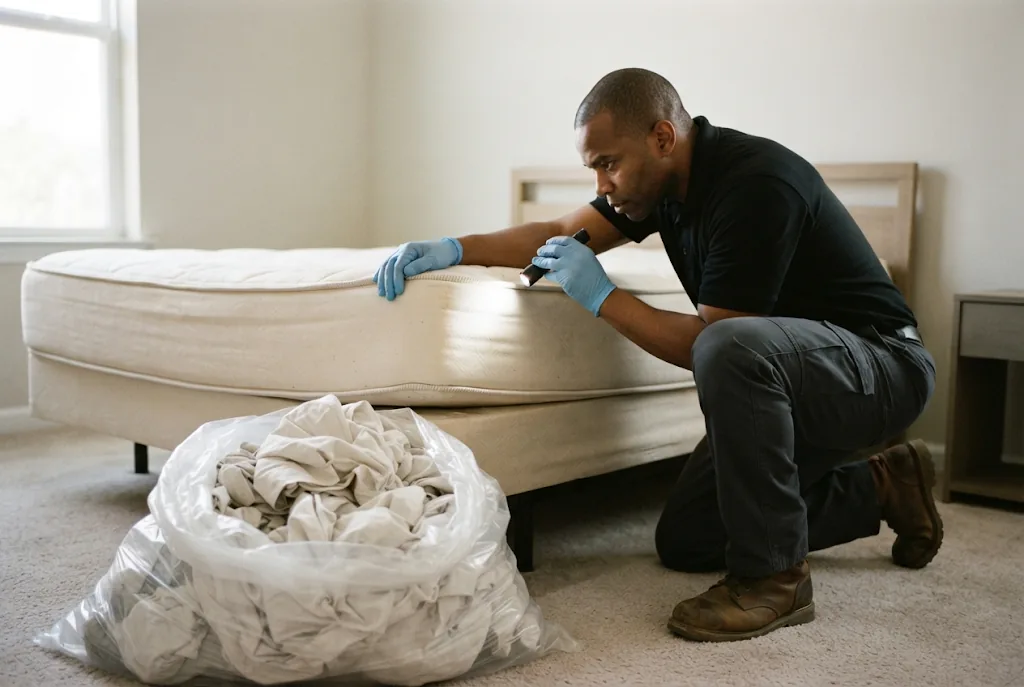
An inspection comes first before any treatment plan is recommended. Our licensed technician checks beds, upholstered furniture, baseboards, and nearby cracks. Identifying where the bed bugs hide means treatments are targeted appropriately. The technician identifies the pest and the conditions supporting it, and explains what they found. The technician provides a recommendation along with the cost, allowing you to review and approve the price prior to treatment starting. Bed bug services are scheduled as a separate appointment rather than treated during a first general pest visit.
Treatment and follow-up visit structure
Bed bug service relies on conventional treatments applied carefully to beds, furniture, and baseboards according to product labels. A follow-up visit is scheduled about two weeks later, and more visits are scheduled if activity remains. Our company does not use heat treatment methods. Not every problem is solved in a single visit, and our technician will explain how many visits to expect based on what they find. Before treatment day, you get written preparation and reentry instructions. Customers follow a written preparation checklist.
Customer steps after returning from a trip
After returning from travel, inspecting your luggage and clothing helps catch bed bugs early. If you notice signs of bed bugs, avoid moving items or mattresses into other rooms, as this spreads the infestation further. Prevention alone does not end an active infestation. Customer responsibilities include reducing clutter and following the written preparation and reentry instructions.
Schedule a professional home inspection
If you suspect bed bugs brought home from travel, reach out to arrange an inspection. Online inquiries get a response during operating hours, typically on the same business day, and our team reaches out by phone or email to set up your visit. For routine maintenance and service options, read our guide on bed bug treatment for your home.