
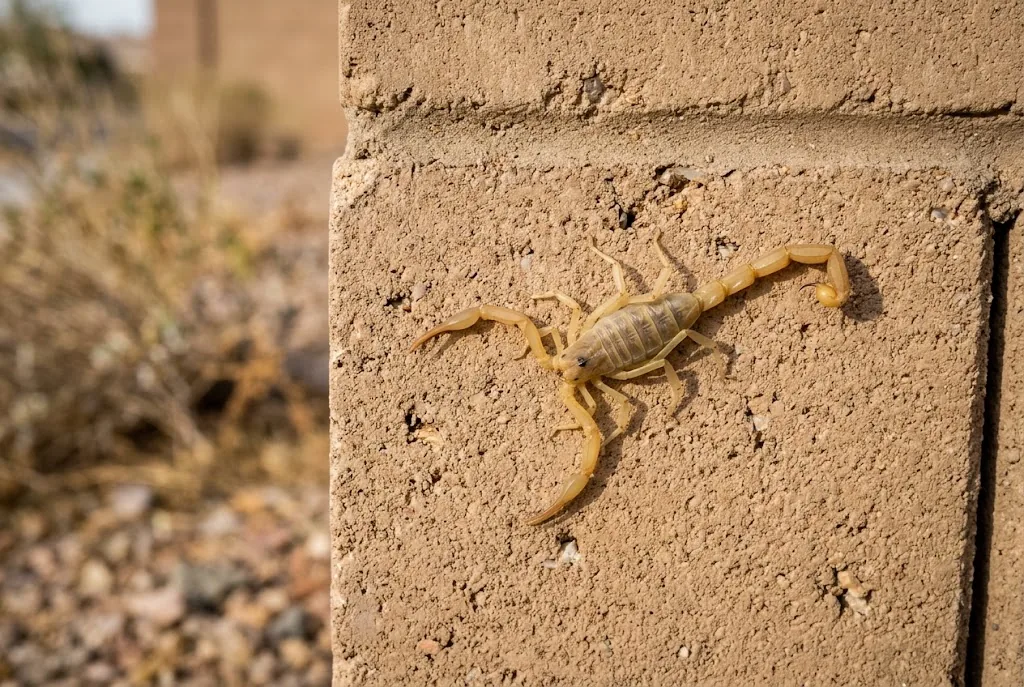
Southern Nevada is home to several scorpion species, but property owners most frequently encounter the Arizona bark scorpion and the desert hairy scorpion. Telling these two species apart is helpful because their habits, climbing abilities, and venom strength differ. We encounter both species across the Las Vegas valley, serving neighborhoods from Rhodes Ranch to Aliante and Boulder City. Recognizing which scorpion is in your yard helps you understand the situation before our technician arrives.
Recognizing the Arizona bark scorpion
The Arizona bark scorpion is the only scorpion in Nevada with venom of real medical significance. Adults are about two to three inches long. They are slender, with a long thin tail and narrow pincers. Their color ranges from light tan to pale brown or straw-yellow, and some have faint darker stripes. Key physical and behavioral traits of the bark scorpion include:
- Ability to climb walls and ceilings
- Capacity to squeeze through a gap about as thin as a credit card
- Hiding in block walls, gravel, woodpiles, irrigation boxes and weep screens
- Glowing under ultraviolet light
Identifying the desert hairy scorpion
The giant desert hairy scorpion is the largest scorpion in North America, with adults reaching about 5.5 inches long. It is found in the deserts of southern Nevada, where it digs burrows. Its sting is painful but is not considered medically significant for most healthy people, though allergic reactions need medical care. The bark scorpion, not this one, is the scorpion of medical concern.
Medical advice and urgent visits
A sting from an Arizona bark scorpion can be more serious for young children and older adults. After a sting, call Poison Control or a doctor for medical advice. We do not provide medical guidance. If you find scorpions indoors in a home with small children, this is an urgent situation. Call us instead of using the form, and the office fits urgent calls in when a technician is available. For standard inquiries, a request sent online is usually answered the same business day.
How our technicians handle an infestation
You do not need to know which pest you have before you call. Describe what you are seeing, and the technician identifies it upon arrival. The technician inspects the exterior and interior, finds where the scorpions are coming from, and notes the conditions supporting them. We offer estimates for general pest service at no cost, and you are shown the price for approval before we start the work. A night inspection with ultraviolet lights on the first visit is a standard part of our scorpion service, allowing us to find them in the dark. We also recommend exclusion work, like installing door sweeps and weep screen guards. Our Scorpion Plan includes a blacklight inspection, exterior visits every two months, and scorpion-focused treatments of block walls, gravel, and weep screens. The Scorpion Plan also includes everything in our Quarterly Home Pest Plan, managing ants, cockroaches, spiders, crickets, earwigs, silverfish, centipedes, and pill bugs. Plan customers receive free re-service between scheduled visits if covered pests appear.
What you can do to prevent scorpions
Trimming plants away from walls, keeping gravel and woodpiles away from the house, and keeping garages tidy are customer responsibilities that reduce scorpion hiding spots. Fixing leaks and keeping irrigation off the foundation also helps. Sealing gaps and screens is another way to lower the number of entry points. Remember that prevention alone does not end an active infestation. We supply written preparation and reentry guidelines before your treatment day. These written documents dictate reentry, and the customer, not the service technician, keeps children and pets out of treated areas. Learn more about our initial inspections and structural treatments by visiting our scorpion control page.